
At the AI & Digitalization in HSE Forum in Madrid on November 18 and 19, 2026, Dr. Laurent Bonnardot, MyC’s founder and CEO, and I spoke to HSE leaders about AI and health data. This is the written version of our talk.
What holds AI back on health data
The talk opened with questions for the room: who uses AI today, what for, and what is holding them back. The answers offered for that last question were a lack of data or no access to it, data privacy and security, and the accuracy and reliability of what AI produces. Each of them points to a requirement that has to be met before AI works on health data.
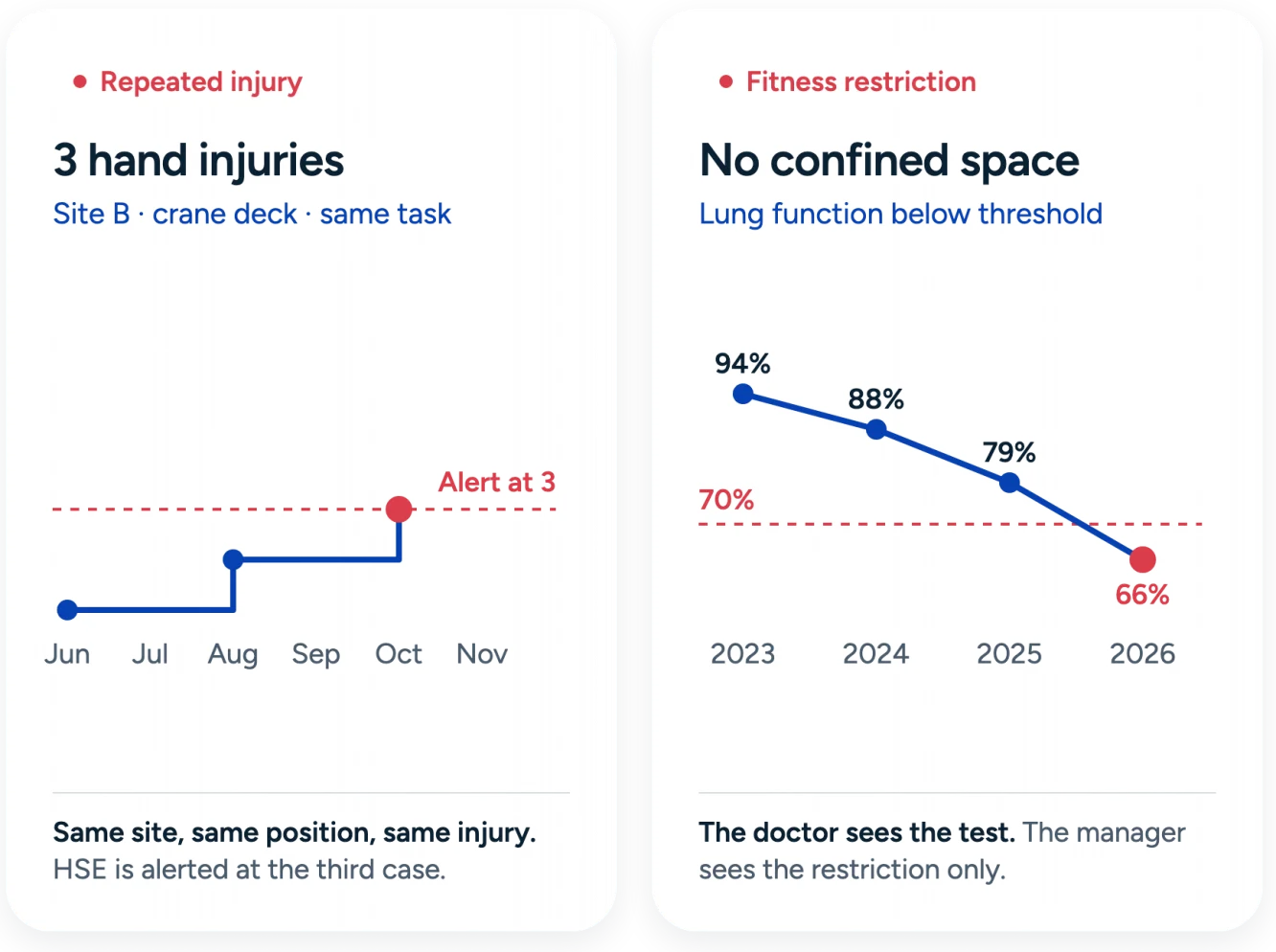
Health data is where these concerns are sharpest, and where HSE has the most to gain. Disease, not injury, causes 81% of work-related deaths (WHO/ILO, 2021), and the early signals sit with medical teams: repeated short absences, lung function below a worker’s baseline, fitness-to-work restrictions clustering in one job. Each one means little on its own. Read across sites and over years, they show where a risk is developing.
AI can do that reading at a scale no team can. But on health data, it rests on three requirements, and if one is missing, it falls over.
Quality: Consistent data across sites and years
AI answers are only as reliable as the health data underneath. On many sites, health data still lives on paper, in spreadsheets, in PDFs or in email, with a different tool on each site. Fed that mix, AI returns figures that don’t match from one site to the next, misses abnormal results and produces output no one can rely on.
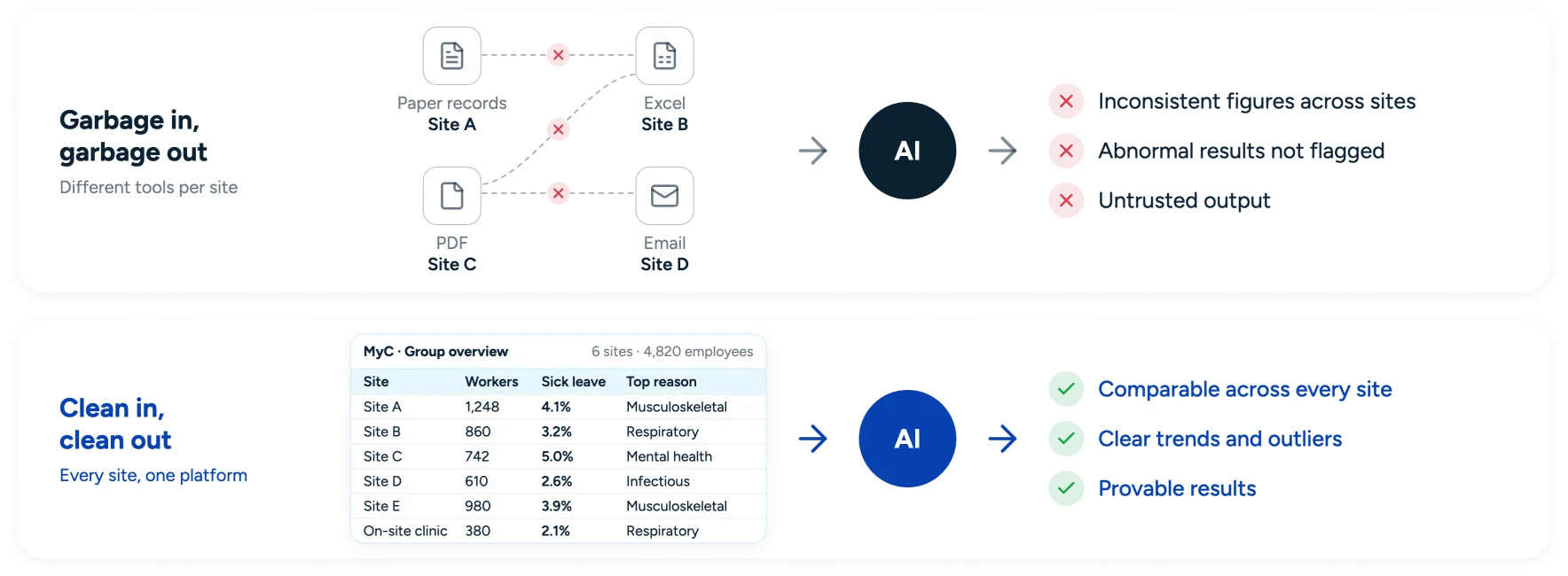
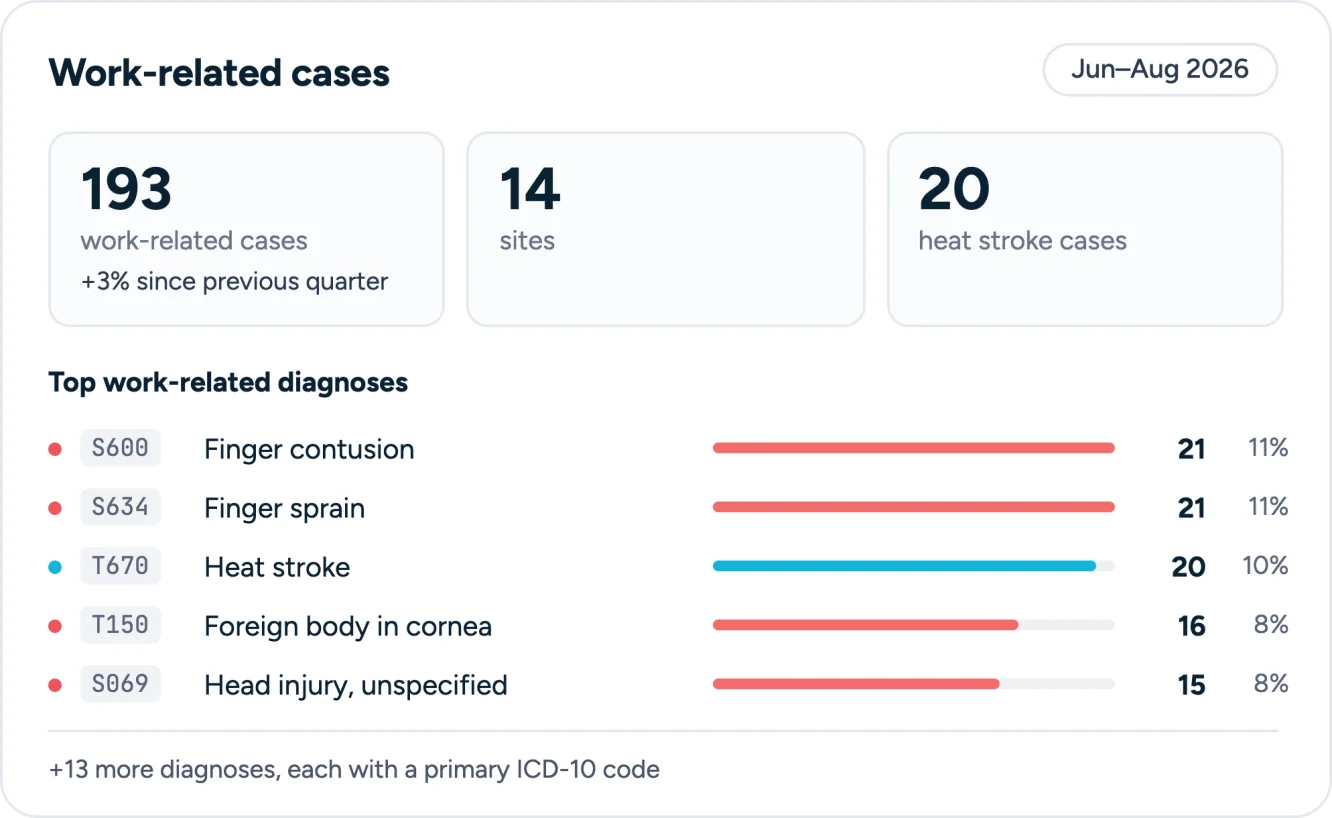
Quality means data that is reliable, complete and consistent over time and across countries. Each fact is recorded once, at the source: the HR roster, the medical device, the medical team. Each diagnosis carries an ICD-10 code, so cases add up across sites. Each worker has one record, whatever the site, country, provider or decade. That only holds when the system follows the clinical workflow, so medical teams use it every day.
Security: The same protection as the medical record
Health data is a special category under the GDPR, and some countries require it to be hosted in the country (GDPR and workforce health data). AI needs the same protection as the health data it handles, which comes down to limiting the attack surface:
- Hosting that meets each country’s health data rules
- Encryption at rest and in transit
- Isolation, for example a self-hosted model, so health data is not sent to an outside AI service
At MyC, the AI agent runs on an open-source model that MyC hosts itself. MyC is ISO 27001 certified and supports GDPR and HIPAA compliance.
Control: The right data for the right role
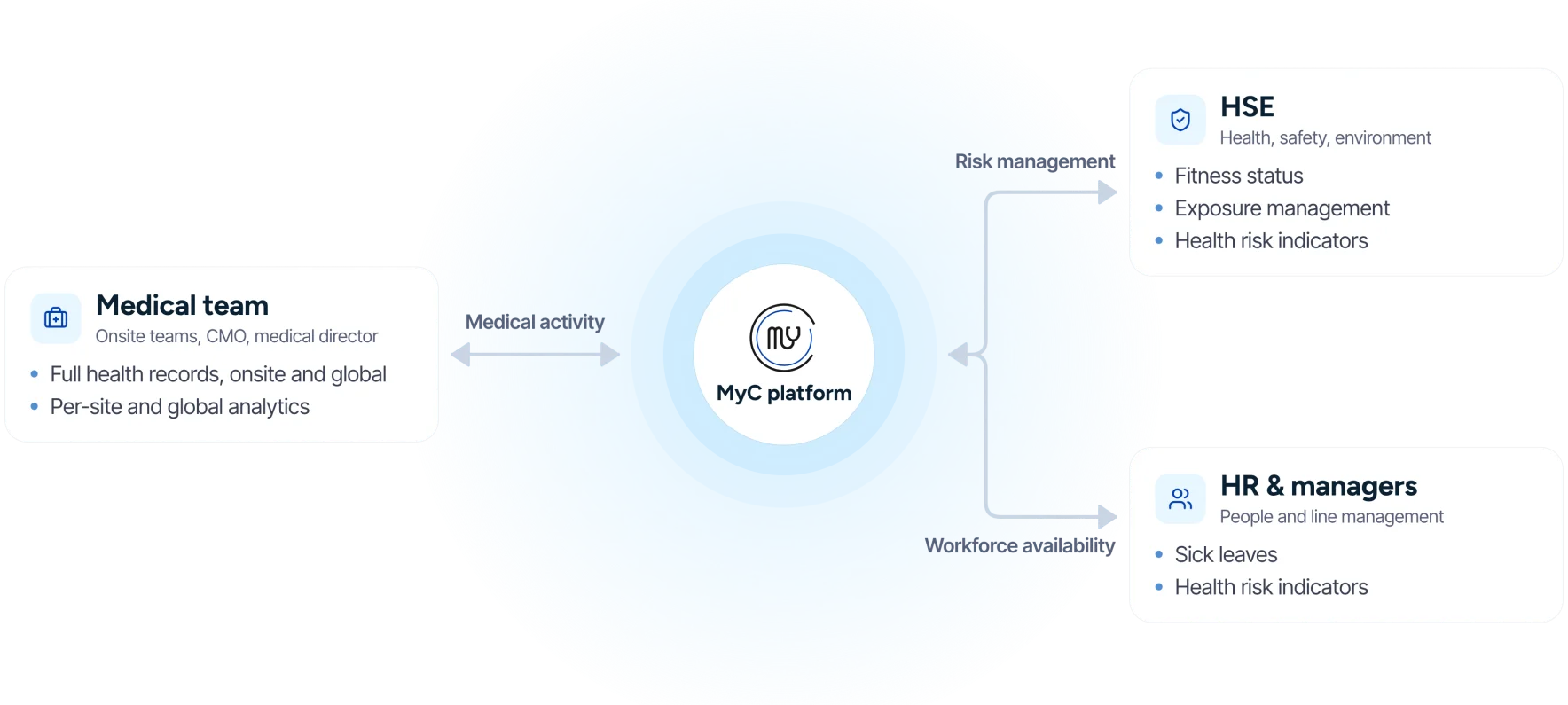
Control means each person sees what their role needs, and nothing more. The medical team works in the full record. HSE sees fitness status, exposure management and health risk indicators, without the diagnosis behind them. HR and managers see sick leave and health risk indicators. Every access is logged: who accessed which data, and when.
An AI assistant has to follow the same rules: it should answer with only what the person asking is allowed to see, and what it reads should be logged like any other access.
Control is also what makes confidentiality and prevention compatible. One worker’s file stays with the doctor. Hearing loss rising in one job across all sites is a prevention finding, and it belongs with the people who can change the work, as long as trends are only shown for groups large enough that no one can be recognized.
What AI can do once the three are in place
With quality, security and control in place, AI helps with two things that have held health data back.
The first is complexity. A global company runs dozens to hundreds of sites, works with several medical providers and clinics, and employs contractors alongside its own staff. That volume is past what a person can review by hand. AI can read across all of it and flag patterns as they emerge: the same injury three times at the same position, one site with three times the hearing shifts of the others, one job function with three times the average sick leave.
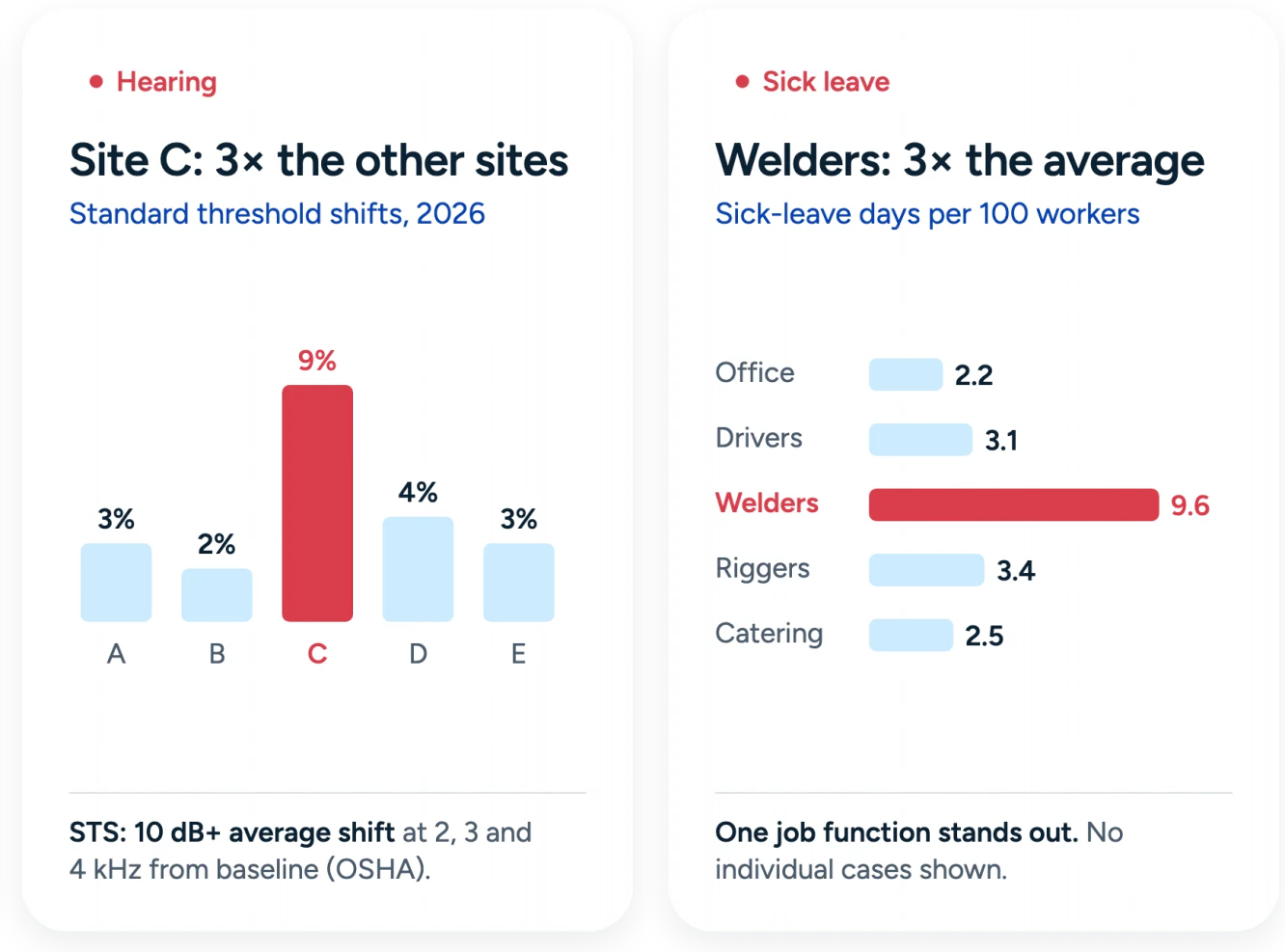
The second is culture. Take one worker with one hearing problem. The doctor writes H83.3, the ICD-10 code for noise effects on the inner ear. HSE thinks noise exposure. HR thinks sick leave. AI gives HSE a way into medical data in its own words, without opening anyone’s file.
Confidentiality is the one thing AI doesn’t help with: it must stand. It is non-negotiable, and the three requirements above are what keep it standing. The talk closed with a demonstration of the MyC AI agent.
Three questions to take back
- Are overdue health surveillance exams visible across all your sites?
- Will an exposure record made in 2026 still be retrievable in 2045?
- Does health data reach HSE, and does it do so compliantly?
To see where your organization stands, take the Health survey. It takes 2 to 3 minutes and places your health program at one of three levels (fragmented, structured or governed), with what to work on next. It opens with two questions on AI: whether you would trust an AI answer on workforce health, and where your organization stands on using AI with health data.
For the case for central health data across a company, read our white paper on global health policy.