The case for managing workforce health centrally: staying compliant in every country, keeping people fit for work and reducing cost. And how one record per employee makes it possible.
Dr. Laurent Bonnardot, Founder and CEO, MyC · October 2026
81% of work-related deaths are caused by disease, not injury (WHO/ILO, 2021). Yet the health data that would show where that risk sits is most often still kept site by site, in the hands of each local medical team, and is not accessible to HSE, HR and management.
As a result, boards receive little to no reporting on employee health, although 83% of C-suite executives say that workforce well-being should be discussed at board level (Deloitte, 2023).
Since medical costs keep increasing, health data is also the strongest cost argument a medical director can make internally. The medical cost trend facing US employers is 9% in 2027 (PwC, 2026), and insurers project 10.3% worldwide for 2026 (WTW, 2026).
In Great Britain, workplace injury and new cases of work-related ill health cost £22.9 billion a year, and 72% of that comes from illness rather than injury (HSE, 2023/24). A health program built around recordable incidents only addresses the remaining 28%.
Where the £22.9 billion goes
Annual cost of workplace injury and new cases of work-related ill health, Great Britain
72%
ill health, £16.4bn, mostly unmeasured on site
28%
injury, £6.5bn, the part incident programs track
Figure 1. Source: HSE, 2023/24.
This paper looks into how to make health data usable across a company while keeping the medical details confidential. We’ll cover why health data now matters to companies, why it is still scattered across sites and systems, what makes it compliant and usable, and what each function gains from it.
What health data covers
In the context of employee health, health data is usually understood as the clinical record, which is one reason it has been left to doctors. In practice, it includes every record of a health-related activity for every worker, both employees and contractors.
Primary care delivered on site
Occupational health follow-up: fitness to work, exposure history, surveillance history, sick leaves, statutory reporting
Prevention campaigns and vaccinations
Case management: medical evacuation, referral, approval, hospitalization follow-up
Each of these is recorded by different teams or providers, often in different tools, which is how one employee’s health ends up scattered across sites and systems.
That breadth is also what makes the subject sensitive. The individual record is confidential and should stay with doctors. Yet without a shared system, medical information often circulates by email, especially when managing cases with external service providers, which is itself a breach of confidentiality.
What HR, HSE and executives need is the same data, but anonymized, aggregated and presented as shares, trends and comparisons, with no names attached.
Read this way, one dataset serves several departments at once. HR sees sick leave, HSE sees fitness-to-work, incidents and exposure groups, and finance sees the full cost of health, well beyond medical spend.
One dataset, several readers
Anonymized, aggregated data
Sick leave
Fitness-to-work
Incidents
Exposure groups
Medical spend
→
HR
Sick-leave rate by site, rolling 12 months
Site A4.1%
Site B3.2%
Site C5.0%
By site and job, no names attached.
HSE
Fitness to work, all sites
Fit 86%
Fit with restriction 11%
Unfit 3%
7incidents this quarter
3overdue checkups
By site and exposure group, no names attached.
Finance
Cost of ill health, by driver
Sick leave46%
Medical spend31%
Incidents23%
Medical spend is only part of the cost.
Figure 2. The same data, read by each function without names attached. Illustrative.
Chapter 1
Why health data is now key for companies
Health keeps operations running
During the COVID-19 pandemic, a global energy company tasked Dr. Laurent Bonnardot, founder and CEO of MyC, with tracking cases among its workers in Uganda. A single cluster on a site would have cost millions in lost revenue. To prevent it, the company needed to know every day, across every site, who was sick, who had been exposed and who was fit to work. The pandemic made one thing concrete for executives: employee health keeps operations running, and it can stop them.
Health data has to be secure and usable
Regulators set strict rules on how medical data is handled. In the EU, health data is a special category of personal data (GDPR, Art. 9). In the US, HIPAA applies to healthcare providers and health plans, but usually not to the health information an employer holds about its own employees (HHS), while OSHA requires employers to keep employee medical records for the length of employment plus 30 years (OSHA, 29 CFR 1910.1020).
Some rules also reach the systems themselves. In the Netherlands, care providers must run their information systems in line with the NEN 7510 security standard (Stb. 2017, 446). In the EU, electronic health record systems will need common interoperability and logging components, starting in 2029 (European Commission, EHDS).
Rules on how health data is handled
GDPR, Art. 9European Union: health data is a special category
EHDSEuropean Union: common requirements for health record systems from 2029
NEN 7510Netherlands: security standard care providers must follow
LGPD, Art. 11Brazil: health data is sensitive
HIPAAUnited States: healthcare providers and health plans
OSHA 1910.1020United States: medical records kept for employment plus 30 years
Figure 3. A selection of rules that apply to health data.
Compliance is only part of the question. A health record mixes clinical data, such as diagnoses and test results, with operational data, such as fitness-to-work decisions and sick leave. Recorded together, all of it falls under medical confidentiality, including the parts other teams could use. Separating data by type is what makes it secure and usable at the same time.
Regulators expect complete records
Regulators have also raised the stakes. In 2022, OSHA, the US workplace safety regulator, cited Amazon for 14 recordkeeping violations: injuries and illnesses not recorded, misclassified or recorded late, and records not produced on time. The proposed penalty was $29,008, small for a company of that size, but OSHA announced it in a national news release that affected the company’s reputation (OSHA, 2022).
Publicity is a deliberate tool. When OSHA publicly names a company, other workplaces within about three miles record 73% fewer violations, without being inspected, and one press release prevents as many violations as 210 inspections (Johnson, American Economic Review, 2020).
The deterrent weight of one press release
1 press release
=
210 inspections
73%
fewer violations at workplaces within about three miles, without being inspected
Figure 4. Source: Johnson, American Economic Review, 2020.
In the EU, large companies now have to publish their number of recordable cases of work-related ill health and the days lost to them (CSRD, ESRS S1). Both obligations assume records that are complete and available for every site.
Prevention pays
At the same time, employee health has started to show up in business performance. Fewer incidents and fewer sick leaves mean more people at work. In the EU, work-related illness and injury cost an estimated €476 billion a year, 3.3% of GDP (EU-OSHA and ILO, 2017). Prevention returns an estimated €2.20 for every euro spent (ISSA and DGUV, 2011).
To spend that money where it works, a company has to see where risk is building: which site, which job, which condition. Each of these depends on health data the company can read across its sites. In most companies, that data is still scattered across sites and providers, out of the company’s reach, and the reasons go back to how occupational health has been organized.
Chapter 2
Health data is siloed by inheritance
Health data has stayed with medical teams for confidentiality reasons. It is some of the most private information a person shares, and they share it with a doctor in confidence.
Each site has also long worked with its own methods and tools: on paper, in spreadsheets, in software installed locally. Across a company’s sites, there is usually no common standard for how health information is collected. A worker’s record is complete only on the site where it was made.
Site by site, health records sit in paper files, spreadsheets, PDFs and emails, and headquarters can't compare them. In one global view, with one record per worker, the same sites read as one group overview.
Site by site
Per-site access.
Different formats and accuracy.
Site A
Paper records
Site B
Excel
On-site clinic
Paper records
Site C
PDF
Site D
Paper
Site E
Email
OH legacy softwareShared by 3 of 10 sites
HeadquartersCan't compare site data
One global view
Role-based access with audit trail.
Centralized data and analytics.
Group overview
10 sites · 7,960 employees
● Live
Surveillance up to date
94%
group average
Sick-leave rate
3.8%
rolling 12 months
Checkups due
212
next 30 days
Top reason
Musculoskeletal
31% of sick-leave days
Site
Employees
Surveillance up to date
Sick-leave rate
Top reason
Site A
1,248
96%
4.1%
Musculoskeletal
Site B
860
91%
3.2%
Respiratory
Site C
742
97%
5.0%
Mental health
Site D
610
89%
2.6%
Infectious
Site E
980
95%
3.9%
Musculoskeletal
Site F
1,105
93%
3.4%
Respiratory
Site G
540
88%
2.9%
Infectious
Site H
1,320
96%
4.4%
Musculoskeletal
On-site clinic
380
98%
2.1%
Respiratory
Offshore rig
175
92%
1.8%
Musculoskeletal
Figure 5. Drag the divider to compare the same sites, site by site and with one record per worker. Illustrative.
Local records are not comparable across sites or over time, and local systems were not built to give different people access to different parts of a record. Currently, most of the time, the data they hold cannot be used beyond the clinic without breaching confidentiality.
Part of the picture sits outside the clinic altogether. HR records sick leaves. HSE records incidents. Both are health-related, but they are kept in systems separate from the medical record, so none of it can be read together.
From any single site, fragmentation rarely looks like a problem. Each site can be fully compliant with local rules. The gaps appear at group level. A missing entry at one site and a late one at another look minor on their own, but regulators add them up across sites, and a company holding its records in separate systems cannot.
Chapter 3
Health data governance
Using health data beyond the clinic depends on the system that holds it. Collecting it the same way on every site and storing it centrally is a requirement for both compliance and accessibility.
Three conditions for compliant use of health data
01Country rules metOne record per employee, processed under each country's data protection and security rules.
02Role-based accessPhysicians work in the full record. HR, HSE and executives see anonymized, aggregated data.
03A log of every accessEach view of a record is recorded, so the question of who saw what, and when, has an answer.
Figure 8.
What any analysis can find is decided when the data is entered. A record that is incomplete on the day of a consultation stays incomplete, however skilled the team that wrote it: what the system asks for, and how, sets the limit. Four requirements for usability:
Structured. Coded vocabularies such as ICD-10, and constrained fields wherever a value should be constrained. Free text can be analyzed with natural language processing, but only if it is written consistently. Structure also means fewer platforms, with health data kept in one system rather than spread across several.
Complete, and visibly incomplete when it is not. In primary care, clinically important information was missing in 13.6% of visits, about one in seven, and judged likely to harm the patient in 44% of those cases (Smith et al., JAMA, 2005).
Accurate at source. Each result goes through as few steps as possible, for example taken directly from the medical device that performed the test rather than retyped.
Consistent over time. Workers are often followed for decades, so testing techniques, equipment and interpretation have to stay the same over that period (ACOEM, JOEM, 2020).
The same rules have to apply on every site. With one record per employee, and medical activities recorded the same way everywhere, results can be compared across sites and over time. A baseline is only useful if everything measured after it was measured the same way.
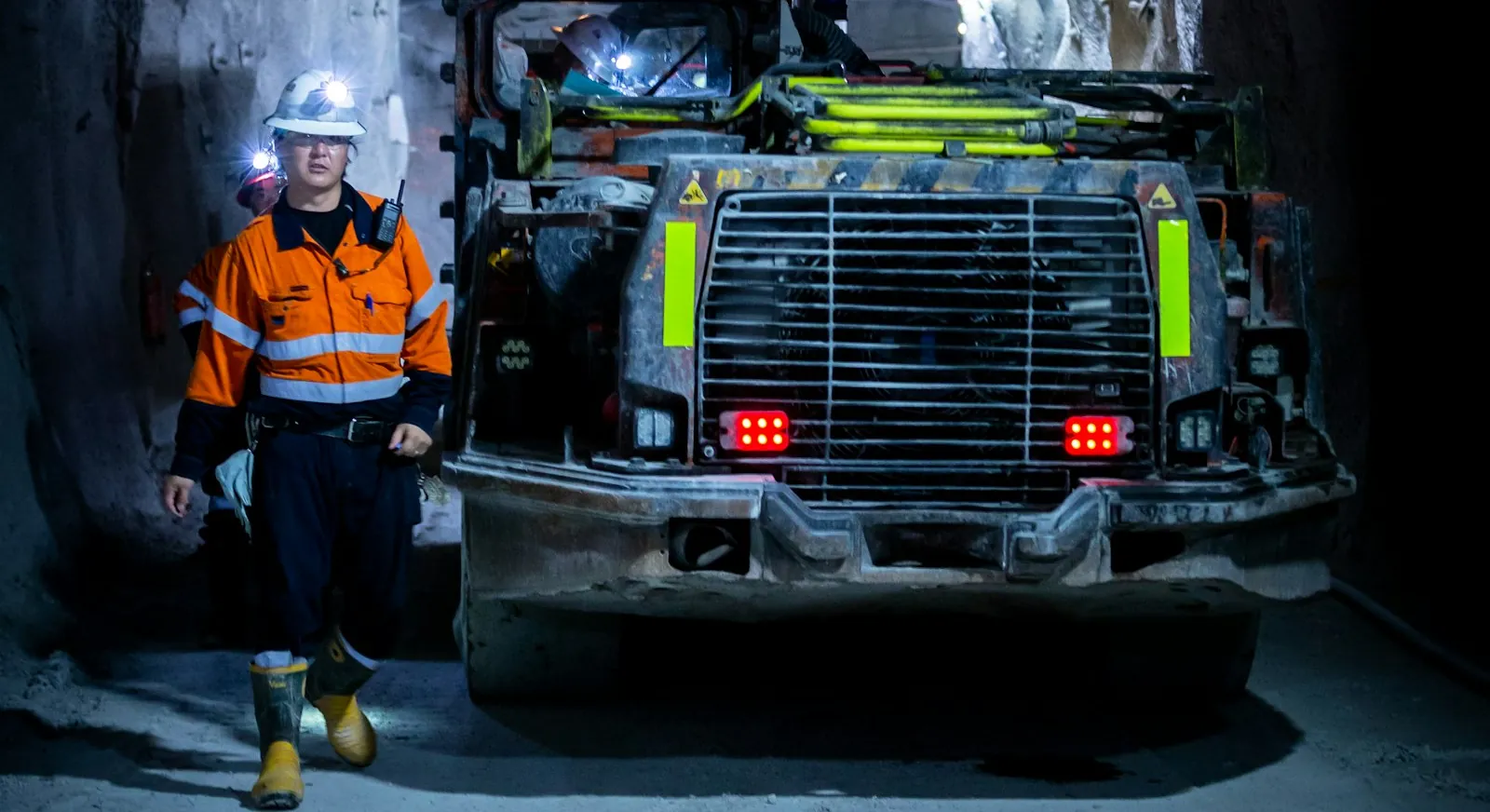
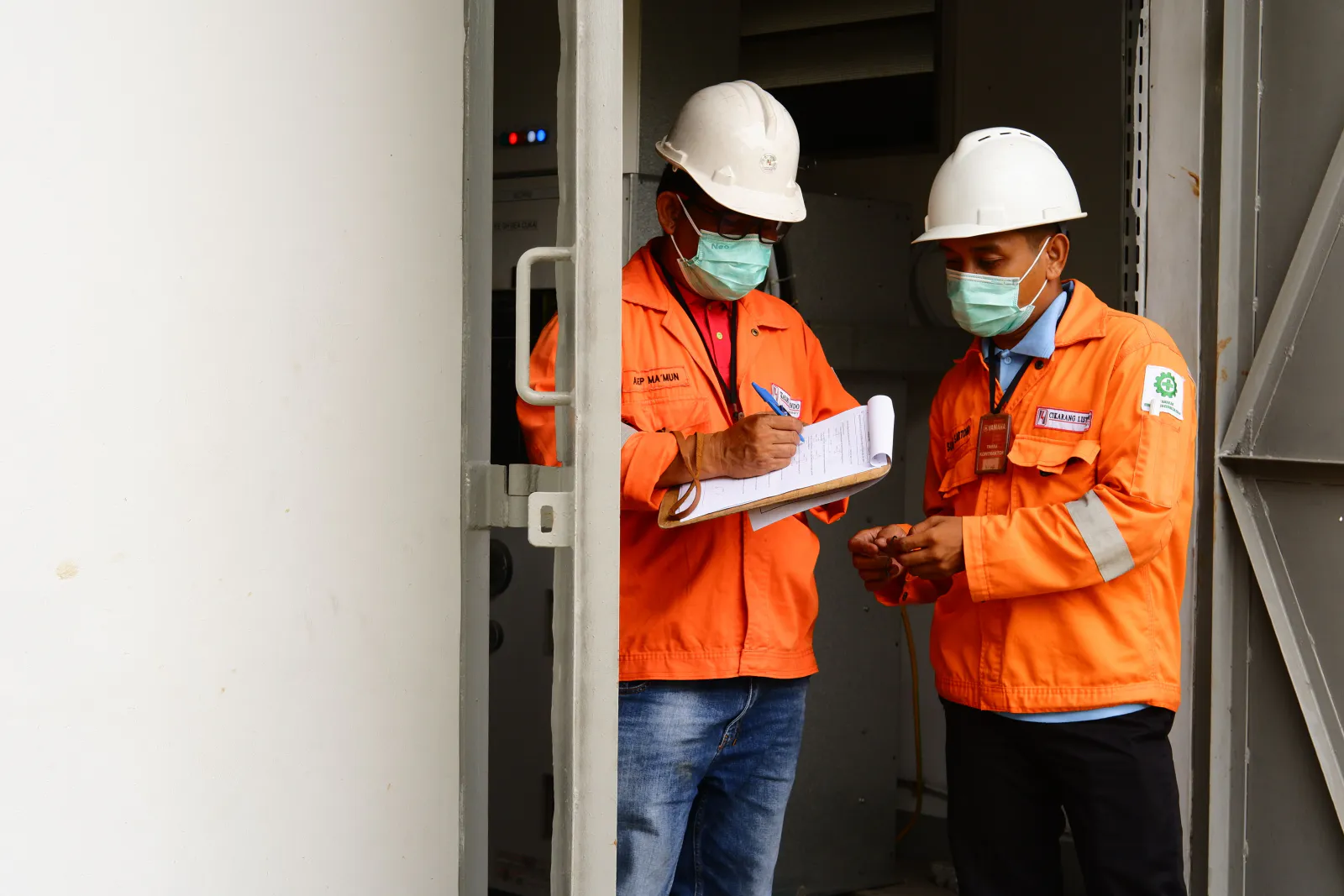
Offshore, on the deck of a production vessel.Underground, in a mine.
Data that meets these conditions can be analyzed at a scale no single site could reach. A common reason AI projects fail is poor data quality: garbage in, garbage out. Consistent standards for data collection, across sites and over time, are a prerequisite for confidence in the reports.
AI research shows what’s possible once data is clean and structured across many workplaces:
83,294 OSHA injury narratives were used to train a deep learning model. The model predicted injury severity with 0.95 accuracy for hospitalization and 0.98 for amputation, and surfaced the causes described in the free text (Khairuddin et al., PeerJ Computer Science, 2024).
1.2 million Ohio workers’ compensation claims were coded by machine learning. Industries were ranked by the claims that ergonomic or slip, trip and fall prevention could have avoided (JOEM, 2018).
Chapter 4
Benefits by role
01 / 06
Medical teams
Each result read against the worker's own history
Key result Better quality of care
Chief medical officers
Global health policy steered and its impact monitored
Key result Program coverage by site
Employees
Safer care and direct access to part of their own record
Key result Safer care
HSE
Gaps against policy seen before they become incidents
Key result Fewer incidents
HR
Sick leave followed over time on each site, so absence is addressed early
Key result Higher workforce availability
Executives
Health managed as a measure of performance
Key result Lower cost of ill health
Medical teams: better care through a longitudinal view
A result is read against the employee’s own history since hire, across transfers and providers.
In spirometry, comparing a worker to their own baseline detects excessive loss of lung function earlier than comparing a single test to population norms, and a decline of 15% or more from that baseline is a reason to refer (ACOEM, JOEM, 2020). Hearing works the same way: a standard threshold shift, an average change of 10 dB or more at 2,000, 3,000 and 4,000 Hz against the worker’s baseline audiogram, can only be detected when that baseline follows the worker (OSHA, 29 CFR 1910.95).
Reading a worker against their own baseline
Hire10 years20 years30 years
Lung functionOwn baseline15% below: refer
Figure 9. Schematic. Source: ACOEM, JOEM, 2020.
Continuity also changes outcomes: in a nationwide Danish cohort, patients who had fewer than 25% of their contacts with their usual provider had a mortality rate 2.6 times higher, and 49% more potentially inappropriate medication, than patients with full continuity (Prior et al., BMC Medicine, 2023).
Chief medical officers: global health policy, steered from evidence
Coverage and testing status are current on any given day, on every site, so it is clear where a program is working and where it is not. Over time, policy can be set from evidence about the workforce, and care can move from reacting to cases to preventing them. Clinical detail stays with the physicians, and the access log shows who saw what, and when.
Who saw what, and when
Role
View
Logged
Site physician
Full record
Yes
Chief medical officer
Coverage by site
Yes
HSE lead
Anonymized trends
Yes
Figure 10. Every access recorded, by role. Illustrative.
Employees: care is safer
Every physician who sees them decides on their full history rather than part of it. They no longer have to repeat the same information at each consultation. Their confidentiality is protected by how the system is built, and they can access part of their own record directly.
One record that follows the worker
HireSite A
TransferSite B
TodaySite C
Figure 11. Schematic.
HSE: fewer incidents, with prevention aimed at the gaps
Many incidents start with a health condition that a physician knew about but the people organizing the work could not see. Aggregated across sites, the same data shows HSE where the workforce stands against its own policies and procedures: cardiovascular risk factors in roles with heavy physical load, reduced lung function among workers exposed to dust or fumes, hearing loss in high-noise areas.
Where the workforce stands against policy
Indicator
Site A
Site B
Site C
Cardiovascular risk factors roles with heavy physical load
Within policy
Gap
Within policy
Reduced lung function dust and fume exposure groups
Gap
Within policy
Within policy
Hearing loss high-noise areas
Within policy
Within policy
Gap
Figure 12. Aggregated, anonymized view by site. Illustrative.
Individual decisions can also be shared without the diagnosis behind them. One approach is to separate the fitness-to-work outcome from its medical basis: HSE sees that a worker is fit with a restriction, such as no work at height, while the reason stays in the physician’s record.
HR: higher workforce availability
Anonymized sick leave trends by site and group of employees show where absence is building, so it can be addressed before it becomes long term. Early patterns matter: in a Danish register study of young employees, those with frequent short absences in their first year of full-time work had a higher risk of long-term sickness absence over the following two years (Sørensen et al., BMJ Public Health, 2025).
First year of full-time work
Frequent short absences
→
Following two years
Higher risk of long-term sickness absence
Figure 13. An early signal in routine sick leave data. Source: Sørensen et al., BMJ Public Health, 2025.
Sick leave is also one of the hardest figures to compare. Medical teams, HR, contractors’ employers and insurers each record it with their own definitions, and sick pay rules differ from one country to the next. Comparing one site with another can mislead. Following each site over time is more reliable, because its definitions stay the same.
Executives: health becomes a measure of performance
Medical costs stop being a line that only goes up, because the company can see what drives them: incidents, sick leave, exposure. Health indicators can be managed centrally, the way financial data already is. Better employee health could generate $3.7 trillion to $11.7 trillion in global economic value, 4% to 12% of global GDP, with 54% to 77% of it coming from productivity (World Economic Forum and McKinsey Health Institute, 2025).
Global economic value of better employee health
$3.7 to $11.7 trillion
$0$3T$6T$9T$12T
4% to 12%
of global GDP
54% to 77%
of that value coming from productivity
Figure 14. Source: World Economic Forum and McKinsey Health Institute, 2025.
In practice, that means a short set of indicators reviewed alongside the rest of the business. The key results in this chapter are a starting point:
Program coverage by site: the share of workers whose fitness-to-work, surveillance and vaccinations are up to date
Health-related incidents: incidents with a health cause, and fitness-to-work restrictions by job position
Workforce availability: days lost to work-related ill health, the figure large EU companies already publish under the CSRD
Cost of ill health: medical spend, sick leave and replacement, in one figure
Each indicator is only as reliable as the records behind it, which is why the conditions in chapter 3 come first.
Chapter 5
Conclusion
Health data becomes usable when there is one record per employee, not one per site: collected in the doctor's hands and read across the company. That is the principle behind MyC, and it comes from practice.
Dr. Laurent Bonnardot spent more than twenty years practicing medicine in some of the world’s most isolated places, and served as medical director for companies on remote industrial sites, before founding MyC.
MyC holds one health record per employee, covering occupational health and primary care: fitness to work, sick leave, consultations, case management and pharmacy. Medical teams work in the full record. HR, HSE and executives work from anonymized trends. The platform is certified to ISO 27001 and NEN 7510, and complies with HIPAA and the GDPR.
Because every activity is recorded the same way on every site, the data can be analyzed beyond reporting to identify early risks, such as:
Sick leaves recurring in the same crew, an early sign of burnout
Repeated consultations for the same symptoms on one site
Fitness-to-work restrictions piling up in one job position
The conditions described in this paper are rarely met all at once. Instead, it’s a gradual evolution. The three levels below map where companies stand and what to work on next.
Three levels of maturity
Fragmented. Health information and practices depend on individuals, local routines or scattered records. Start with a shared process and a consistent way to record information.
Structured. Repeatable processes and maintained records support your health program, but coordination or oversight still depends on manual work. Focus on shared visibility and consistent follow-through.
Governed. Shared information, clear responsibilities and regular reviews support decisions across sites. Sustain these practices and check that improvements lead to better outcomes.
The first level matches the situation described in chapter 2: records that depend on each doctor and each site. The second level is where data quality at entry starts to hold. The third is where health data is used across sites, and where prevention can be aimed at the risks that data shows.
At that level, health data stops being a record of what has already happened to employees. It becomes a way to change what happens next.
Tell us about your sites and your health program, and our team will get back to you.
By submitting this form, you consent to MyC contacting you about its products, services and events. You can unsubscribe at any time. For more information, see our Privacy Policy.
The form is taking longer than expected. Please email us.
Request sent
Thanks for reaching out. Our team will get back to you shortly.