Manage worker health across your plants
Keep workplace exposures, health surveillance and medical results together in one record per worker.



Keep exposure records available for decades
Illness can appear years after exposure to a harmful substance. Records need to remain available long after a worker leaves or a plant closes. Keep exposure history and health surveillance records together so teams can find the details they need.
30
years of legal obligation to keep exposure records
OSHA 29 CFR 1910.1020(d)
53,000
US deaths a year from work-related illness
Leigh, Milbank Quarterly, 2011 (2007 data)
$181.4B
cost of work-related injuries in the US in 2024, excluding illness that appears later
National Safety Council, Injury Facts
Manage health risks across every plant
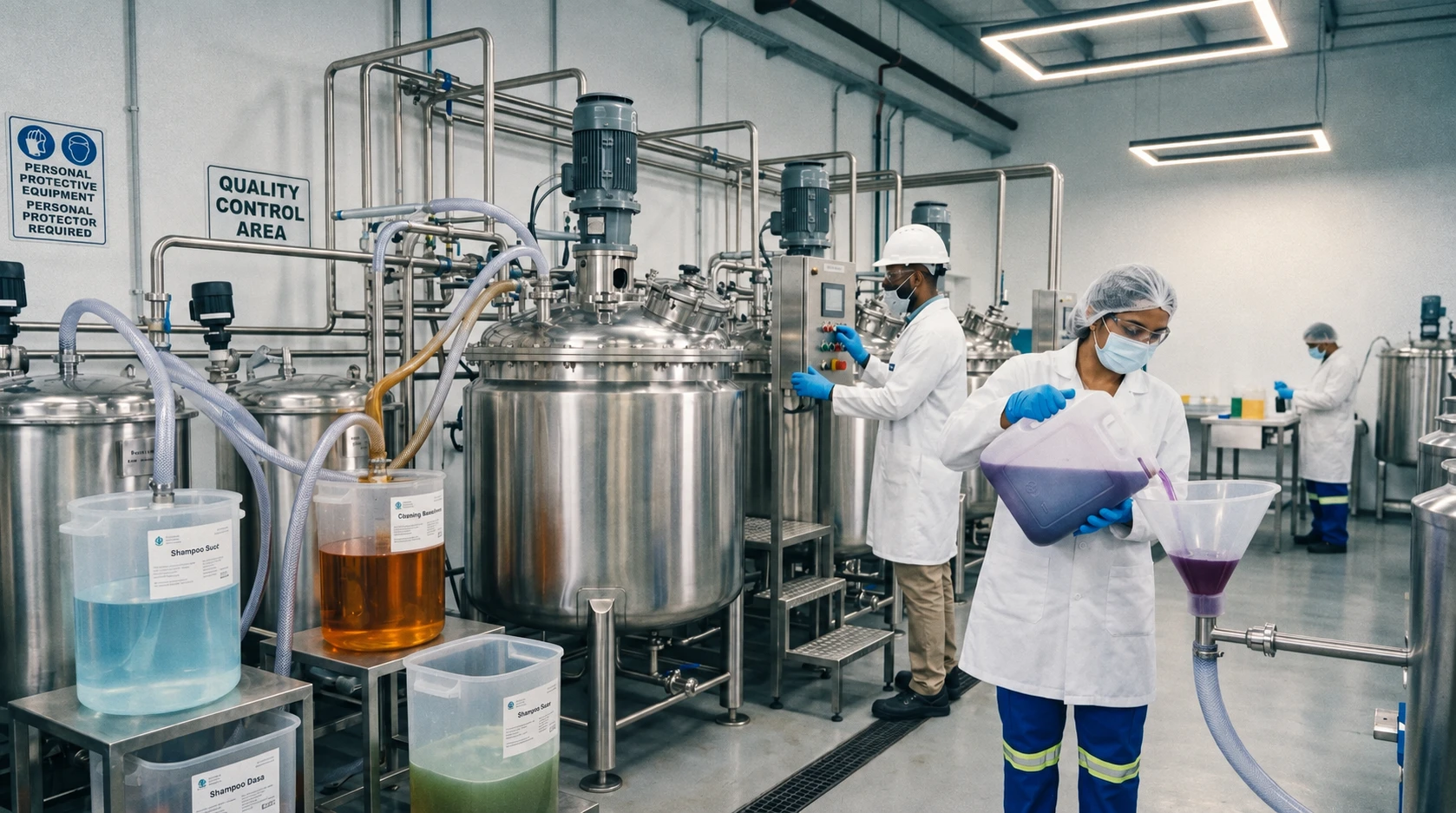
Plan health surveillance around each substance and role
- Plan health surveillance for each substance and role across all plants
- Schedule medical exams from each worker's exposure, not from the calendar
- Keep exposure and health records for 30 years after a worker leaves
- Run pesticide and cholinesterase monitoring on one standard, from small sites to large plants in many countries
53%
of work-related deaths in the EU are caused by cancer
European Parliament, carcinogens directive amendments, 2017-2019
Run plant medicals for large hourly and seasonal workforces
- Track hearing on noisy bottling lines and mills, with results from connected audiometers
- Monitor workers exposed to ammonia refrigeration and cold stores
- Run the statutory plant medicals each country requires for hourly and seasonal workers
- Apply one standard across plants and countries
76%
of work-related hearing loss cases in US private industry occur in manufacturing
US Bureau of Labor Statistics, 2021
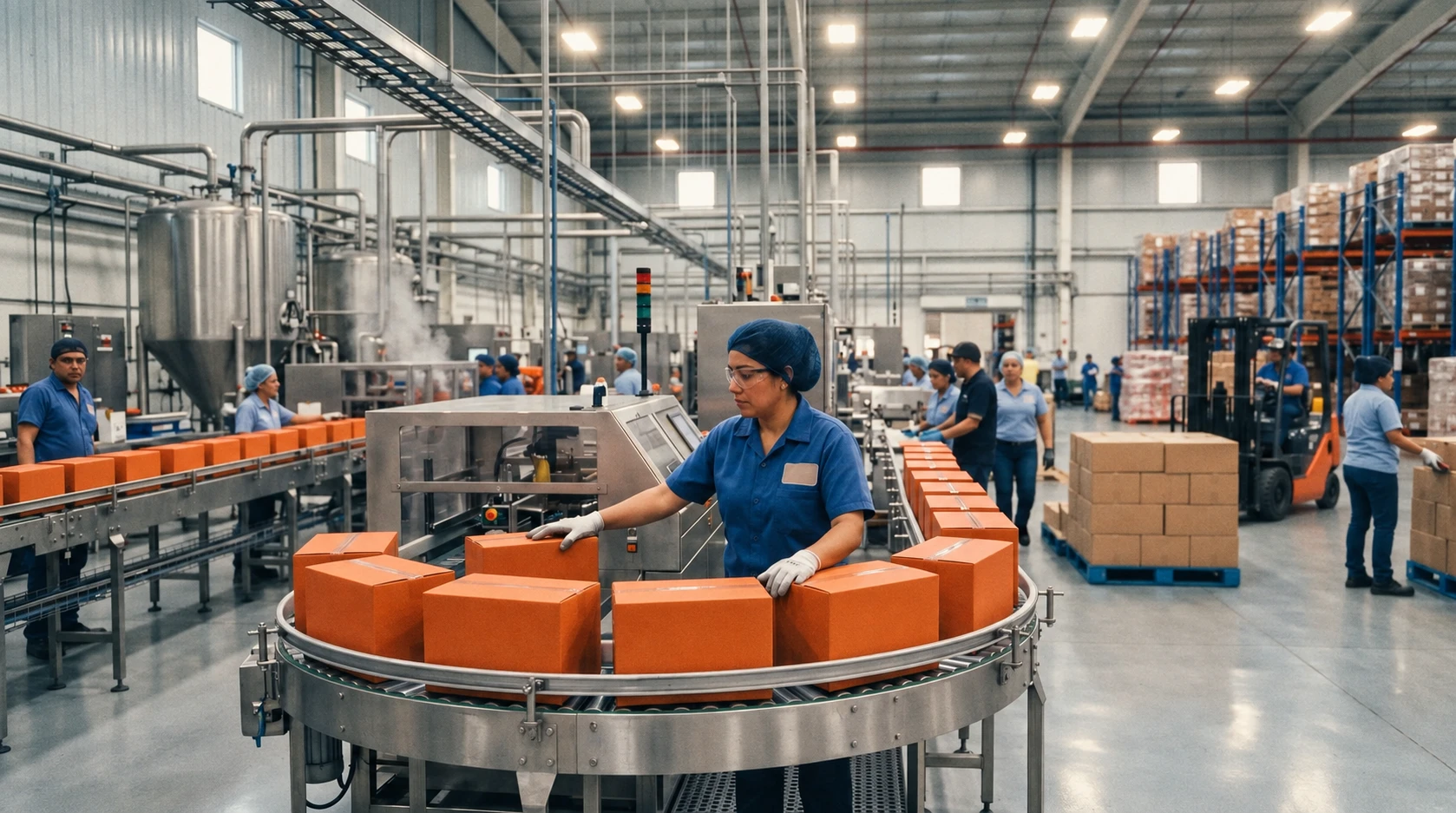
Keep the silica record from first exposure to diagnosis
- Keep exposure history from the decade it happens to the decade silicosis is diagnosed
- Track lung function and chest imaging for every worker exposed to silica dust
- Follow cement dermatitis, dust, noise and heat exposure in one record per worker
- Cover quarry and plant workers on the same health surveillance standard
2017
year respirable crystalline silica joined the EU carcinogens directive, a year after the US silica rule
Directive (EU) 2017/2398; OSHA 29 CFR 1910.1053
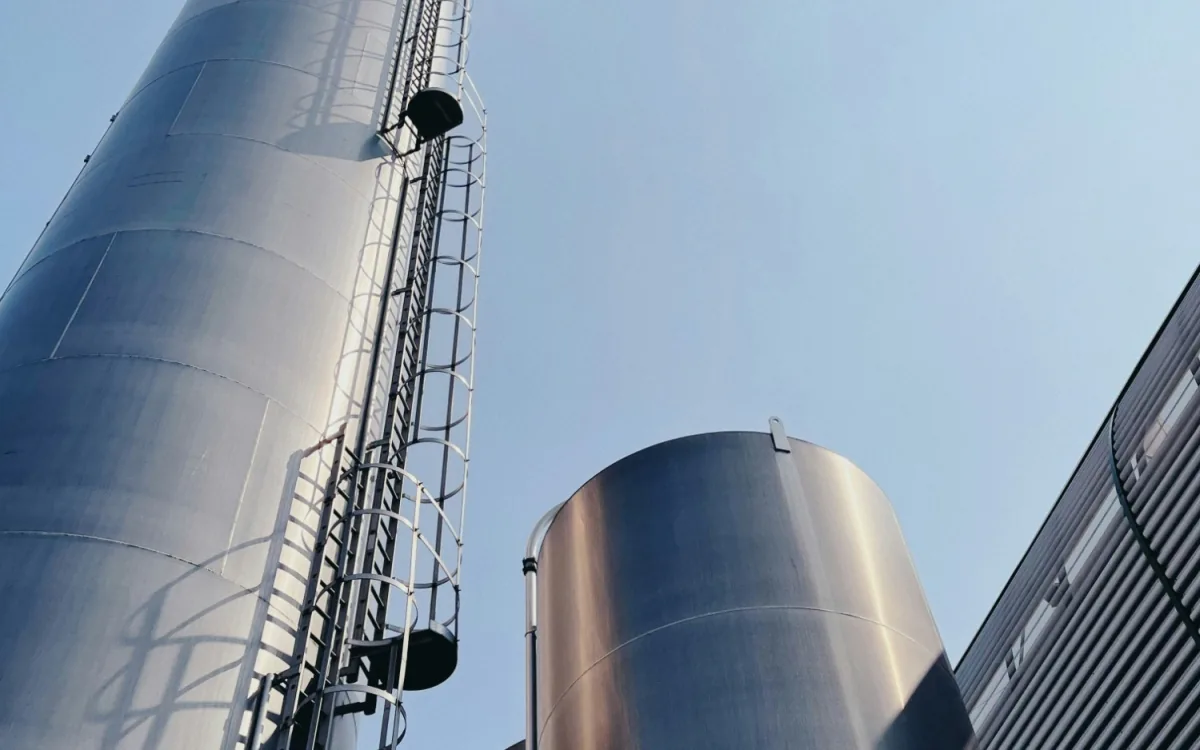
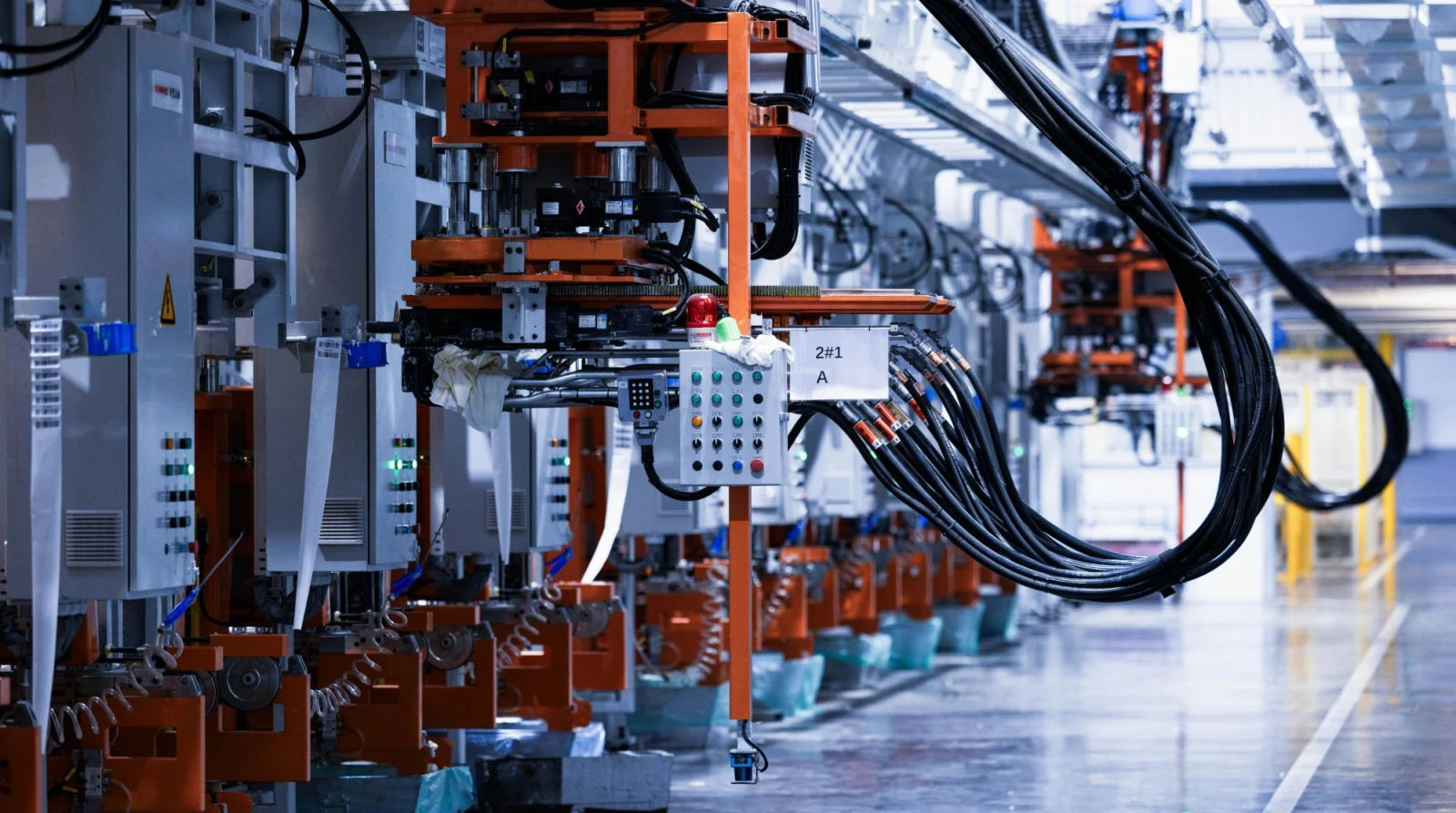
Monitor assembly-plant exposures across large workforces
- Plan health surveillance for paint-shop isocyanates, welding fume and metalworking fluids
- Track noise and musculoskeletal load across workforces of 100,000 or more
- Run fitness-to-work assessments for defense roles, ready for government audit, with medical details kept separate from security clearance
#1
cause of occupational asthma in the UK: isocyanates, used in paint shops
UK Health and Safety Executive
One platform for plant clinics and health surveillance
Keep health surveillance results, consultations and medical cases in one record per worker. See trends across plants without sharing medical details.
Explore the platformElectronic Health Record
Keep each worker’s history across plants and years
Workers keep one health record as they move between plants and countries. Health professionals can review the full history at each visit and compare results over time.
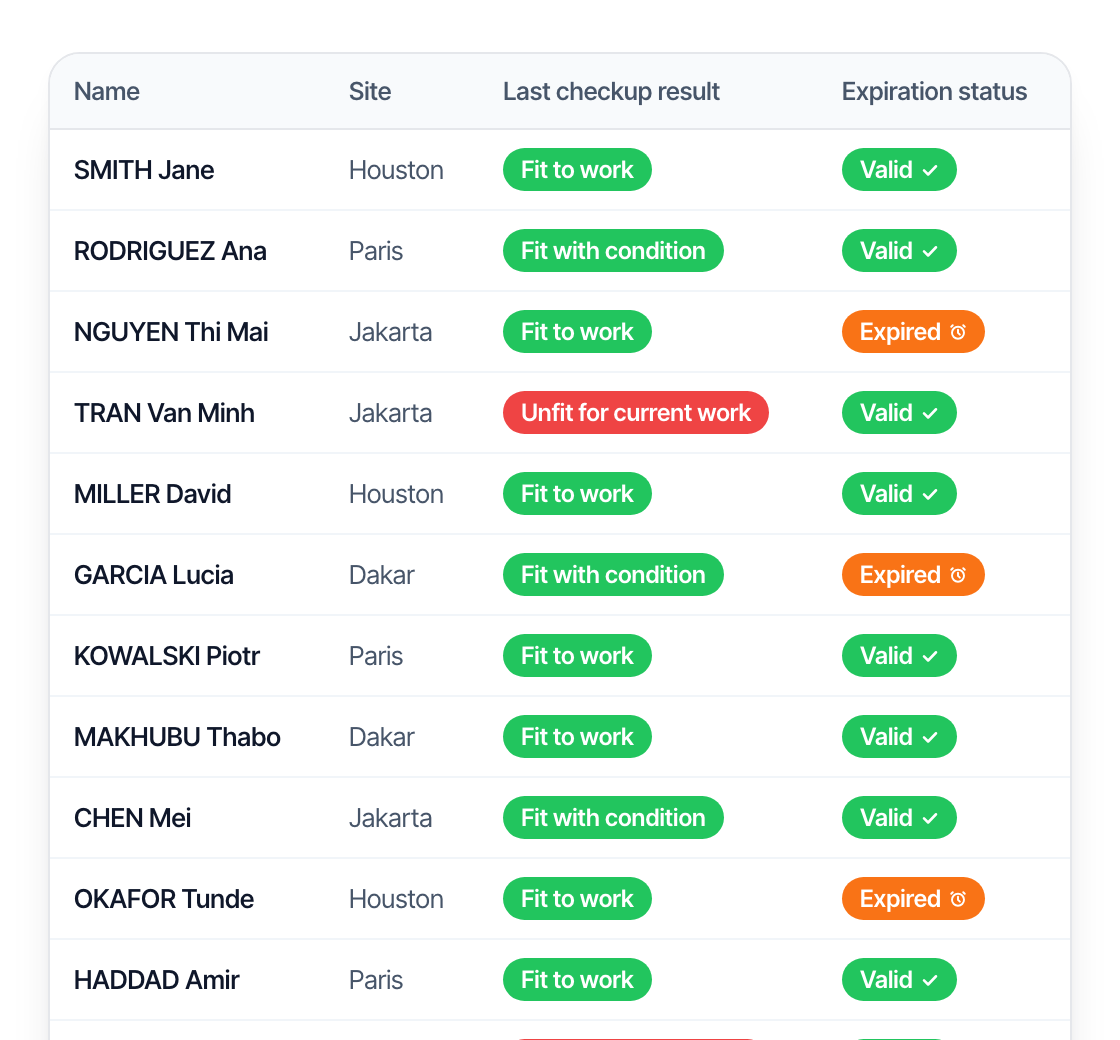
Occupational health
Plan health surveillance around workplace exposures
Set health surveillance requirements by substance, job and plant. Track due dates and certificate expiry dates for each worker.
 AudiometryConnected
 SpirometryConnected
 Vision screeningConnected
 ECGConnected
 Signature padConnected
Medical device integrations
Send test results straight to the health record
Connected medical devices send measurements directly into MyC. Health professionals can compare them with earlier tests without entering the results by hand.

Employee portal
Prepare for visits with secure questionnaires
Employees can answer questionnaires before a visit, upload documents, and exchange messages with health professionals.
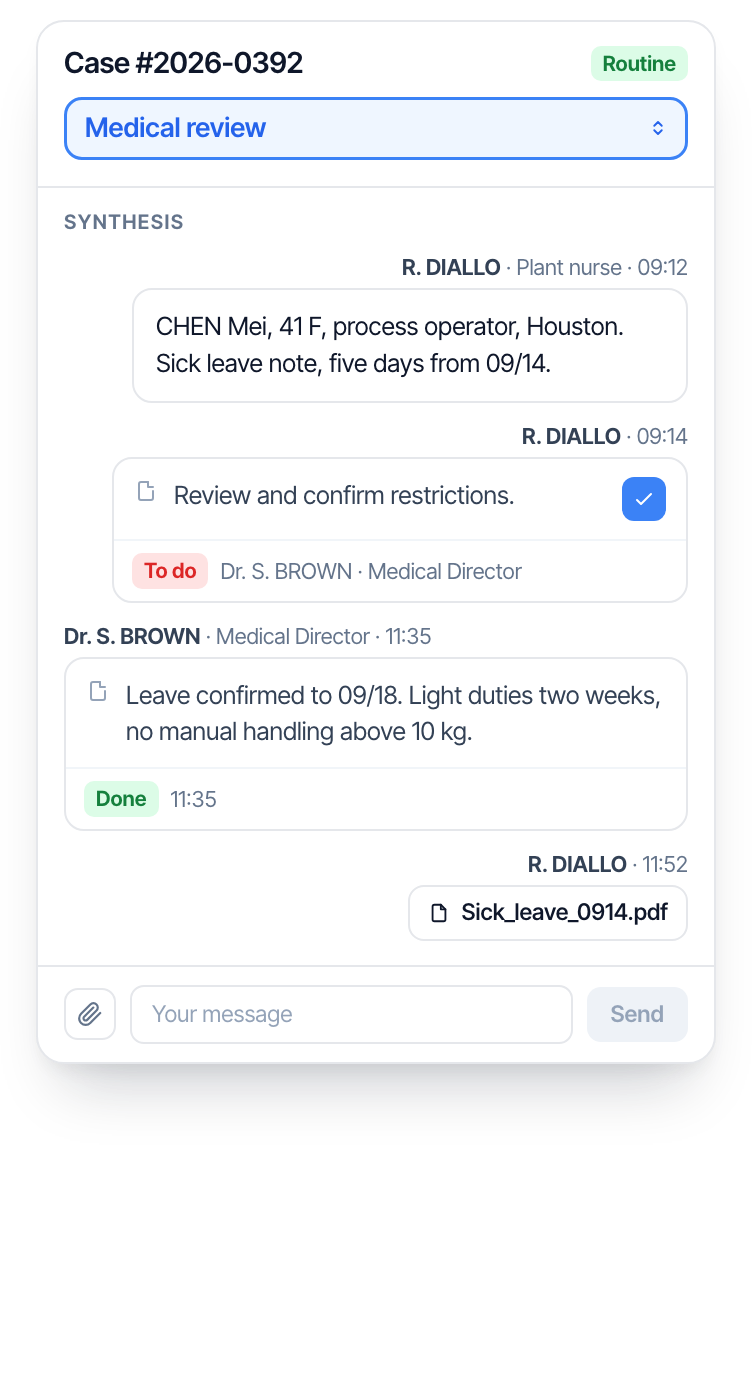
Case management
Track each case from first symptoms to follow-up
Share the full history when referring a worker to a specialist or reviewing work restrictions. Record each step until the case is closed.
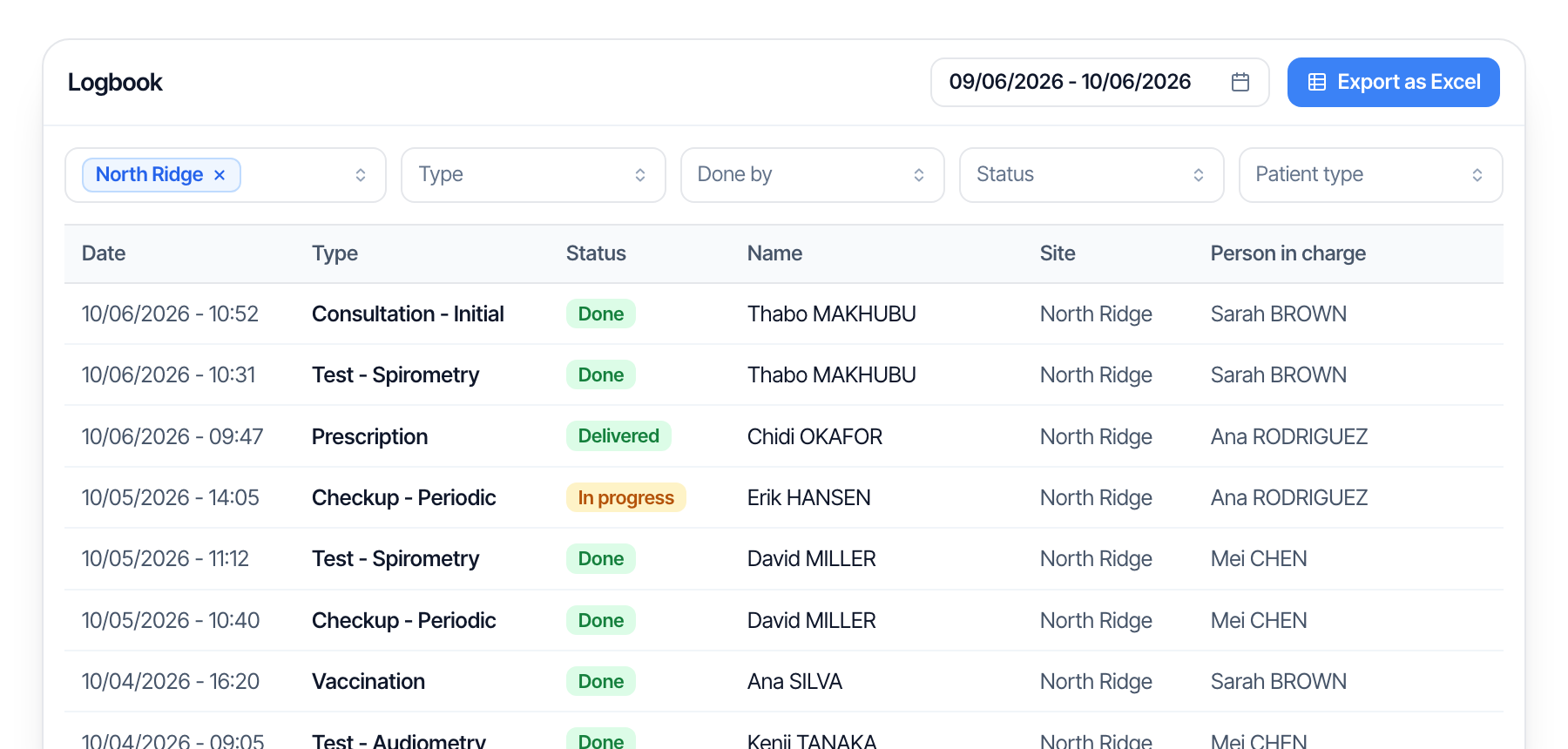
Clinical governance
Keep a clear record of care and decisions
Record medical activities and decisions across all sites. Keep the history available for audits, even decades later.
See health trends across your plants
Help medical leaders and safety teams track illness, workplace exposures and health surveillance. Each role sees the trends it needs without personal medical details.
Standard threshold shift rate by plant
- Audiograms completed
- 1,842
- Crossed the OSHA threshold
- 51
- Of audiograms, across the group
- 2.8%
Clearwater plant: 5.1% of its audiograms crossed the threshold, against 2.8% across the group
- Northgate plant1.3%
- Riverbend complex2.0%
- Redhill facility2.7%
- Fairpoint site3.6%
- Clearwater plant5.1%
- At or below group rate
- Above group rate
- More than 1.5x group rate
Tested per audiogram: 10 dB average at 2, 3 and 4 kHz against the worker's own baseline.
See how MyC helps clinic teams
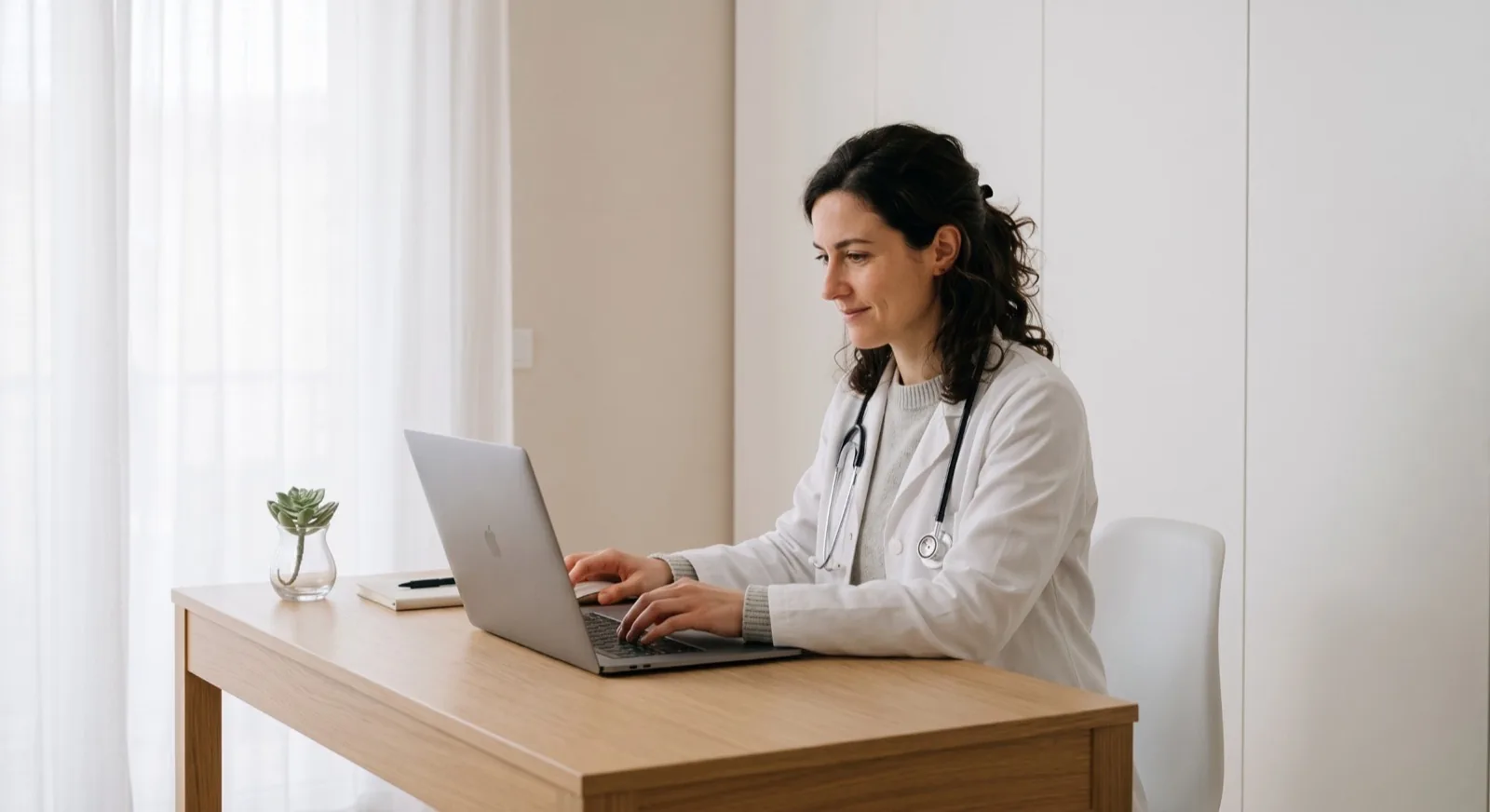
Manufacturing occupational health clinic
At one clinic with three medical staff, six tasks were timed before and after MyC replaced pen and paper.
354
hours of medical staff time saved per year
44
working days freed for patient care
$12,000
value of time saved per clinic per year
Get started in two weeks, with support 24/7
- 01Launch
Set up in two weeks
We configure MyC for your team, import your data and train your health professionals.
- 02Support
Get help any time
Contact us through live chat, 24 hours a day, from any site.
- 03Expertise
Work with a dedicated account manager
Your account manager helps you track results and get more from MyC.
Managing health on a global scale.
Built by doctors, MyC matches the daily clinical work of health professionals on remote sites, clinics, and corporate offices: one platform, one record structure, and reporting from live data.
1M
Electronic Health Records managed
800
sites deployed across 67 countries
24/7
live support
Can we plan health surveillance around workplace exposures?
How long can we keep exposure and health surveillance records?
Can medical devices send results directly to MyC?
Can we adapt MyC to local requirements?
Can managers see health trends without seeing medical records?
How long does it take to set up MyC at a new site?
How does MyC protect health data?
Can MyC connect to our other systems?
Better health starts with better care
Help your teams deliver better care, identify health risks earlier, and focus prevention where it matters most.